

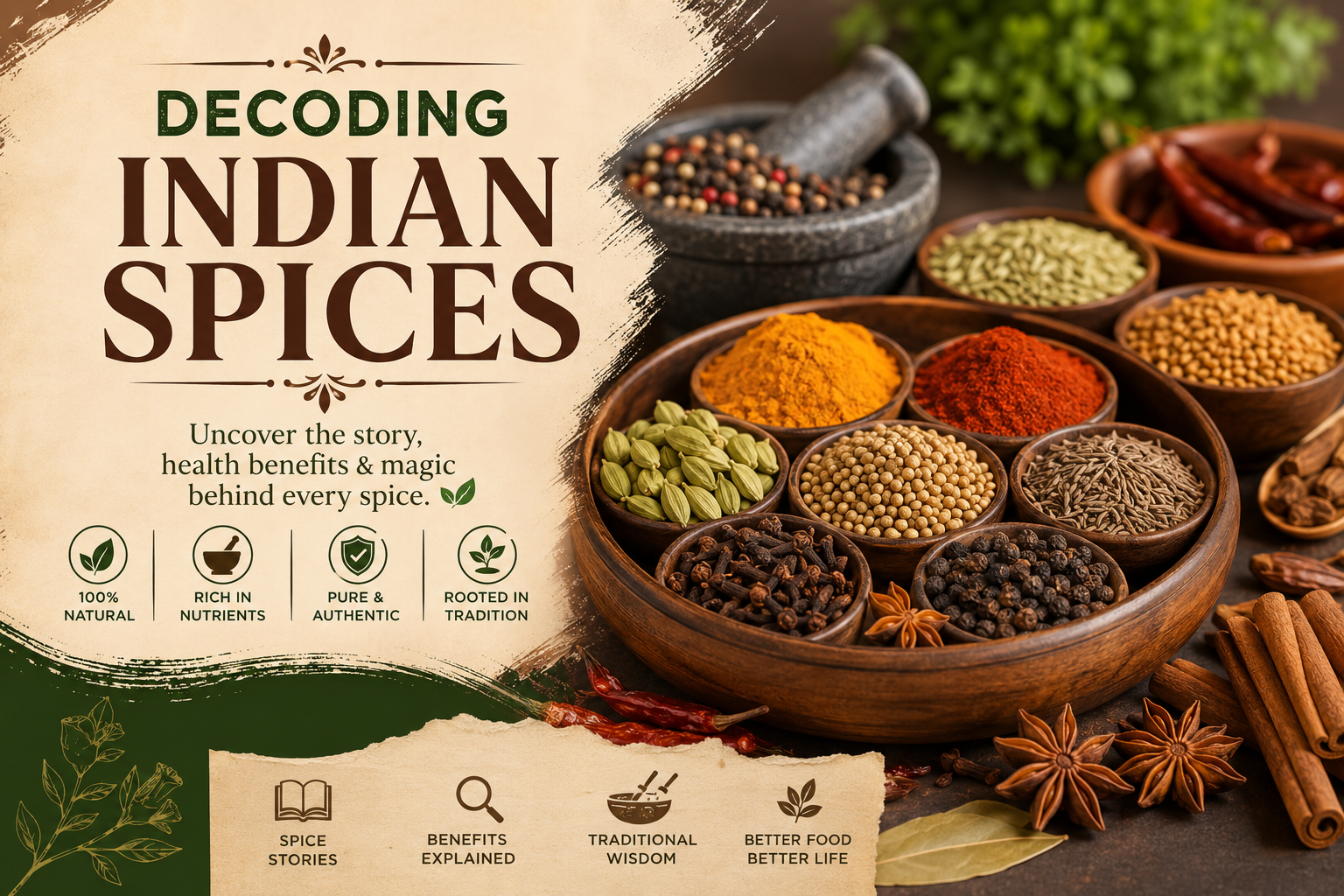
Indian cuisine is famous for its vibrant colors, irresistible aromas, and incredible depth of flavor. But behind every memorable curry, biryani, or dal lies the true hero—the spice.
If you’ve ever wondered why Indian food tastes so rich, or felt overwhelmed by the dozens of spice jars in an Indian kitchen, this guide is for you.
Welcome to Spice 101, where we decode the essential Indian spices, explain how they’re used, and help you cook with confidence.
Why Are Spices So Important in Indian Cooking?
Spices are much more than seasonings—they define the character of every dish. Different combinations of spices create entirely different flavor profiles, even when using the same vegetables or proteins.
Indian cooking relies on balancing six key flavor notes:
- Earthy
- Warm
- Sweet
- Spicy
- Citrusy
- Aromatic
Each spice contributes one or more of these characteristics, creating complex yet harmonious dishes. Research into Indian cuisine has even shown that spices play a central role in its unique flavor combinations across regional cuisines. (arXiv)
Whole Spices vs Ground Spices
One of the biggest secrets of Indian cooking is knowing when to use whole spices and when to use powdered spices.
| Whole Spices | Ground Spices |
|---|---|
| Rich aroma | Strong immediate flavor |
| Used at the beginning of cooking | Added during or near the end |
| Best for tempering (Tadka) | Best for curries and gravies |
| Longer shelf life | Lose aroma faster |
| Examples: Cumin seeds, Cardamom, Cloves | Examples: Turmeric, Coriander Powder, Chili Powder |
Whole spices retain their essential oils much longer than ground spices and are commonly toasted in hot oil or ghee to release their flavors before other ingredients are added. (Zesty Vibe)
The Essential Indian Spices
1. Turmeric (Haldi)
Flavor: Mild, earthy, slightly bitter
Uses
- Dal
- Vegetable curries
- Rice
- Marinades
- Soups
Best Added
During the initial cooking stage.
Known For
- Golden color
- Natural antioxidant compounds
- Everyday cooking staple
2. Cumin (Jeera)
Flavor: Warm, nutty, earthy
Whole Jeera
Perfect for:
- Tadka
- Rice
- Dal
- Curries
Ground Jeera
Ideal for:
- Chaats
- Raita
- Spice blends
- Marinades
3. Coriander (Dhania)
Flavor: Citrusy and mildly sweet
Commonly used in:
- Curry bases
- Dry vegetables
- Spice blends
- Chutneys
Coriander pairs exceptionally well with cumin and forms the backbone of countless Indian recipes. (Phoran)
4. Red Chili Powder
Flavor: Heat with varying intensity
Different varieties offer:
- Bright color
- Mild warmth
- Fiery spice
Used in:
- Curries
- Marinades
- Pickles
- Dry vegetable dishes
5. Black Pepper
Before chilies arrived in India, black pepper was the country’s primary source of heat.
Perfect for:
- Soups
- South Indian dishes
- Rasam
- Egg recipes
6. Mustard Seeds (Rai)
Tiny seeds with a huge impact.
Used primarily in:
- South Indian cooking
- Bengali cuisine
- Pickles
- Coconut-based curries
When heated in oil, mustard seeds pop and release a nutty aroma.
7. Fenugreek Seeds (Methi)
Flavor:
- Slightly bitter
- Nutty
- Deep
Excellent in:
- Pickles
- Sambhar
- Spice blends
- Slow-cooked curries
8. Cardamom (Elaichi)
Green Cardamom
Sweet and floral
Perfect for:
- Tea
- Desserts
- Biryani
- Kheer
Black Cardamom
Smoky and bold
Ideal for:
- Rich gravies
- Meat curries
- Slow cooking
9. Cloves (Laung)
Powerful, warm and aromatic.
Used sparingly in:
- Garam Masala
- Rice
- Biryani
- Masala Chai
10. Cinnamon (Dalchini)
Adds:
- Sweet warmth
- Rich aroma
Common in:
- Mughlai cuisine
- Rice dishes
- Garam Masala
- Desserts
What is Tadka?
Tadka (also called tempering) is one of the most important techniques in Indian cooking.
It involves heating oil or ghee and briefly frying whole spices like:
- Cumin
- Mustard seeds
- Curry leaves
- Dry red chilies
- Asafoetida (Hing)
This process unlocks essential oils, infusing the cooking fat with deep flavor before the remaining ingredients are added. (Namma Markt)
What is Garam Masala?
Contrary to popular belief,
Garam Masala is not a single spice.
It is a carefully balanced blend that typically contains:
- Cumin
- Coriander
- Black Pepper
- Cinnamon
- Cloves
- Cardamom
- Nutmeg
- Bay Leaf
Unlike many powdered spices, Garam Masala is usually added towards the end of cooking to preserve its aroma. (Reddit)
How to Store Spices Properly
To keep spices fresh:
- Store in airtight containers.
- Keep away from sunlight.
- Avoid moisture.
- Store away from the stove.
- Buy whole spices whenever possible and grind in small batches.
Whole spices generally retain their aroma far longer than ground spices, while exposure to heat, air, light, and moisture speeds up flavor loss. (The Times of India)
Beginner’s Spice Kit
If you’re just starting your Indian cooking journey, stock these essentials:
✅ Turmeric Powder
✅ Red Chili Powder
✅ Coriander Powder
✅ Cumin Seeds
✅ Mustard Seeds
✅ Garam Masala
✅ Black Pepper
✅ Cinnamon
✅ Cloves
✅ Green Cardamom
With these ten spices, you’ll be able to prepare hundreds of authentic Indian recipes. (Something’s Cooking)
Common Mistakes Beginners Make
- Burning powdered spices in very hot oil.
- Using too much Garam Masala.
- Skipping the tempering step.
- Buying large quantities of ground spices and storing them for years.
- Not blooming spices properly before adding liquids.
Small adjustments in technique can make a dramatic difference in the final flavor.
Final Thoughts
Indian spices are more than ingredients—they are the foundation of one of the world’s richest culinary traditions. Once you understand how each spice contributes its own aroma, warmth, and depth, you’ll begin to cook with greater confidence and creativity.
Whether you’re preparing a simple dal, a fragrant biryani, or a hearty vegetable curry, mastering these essential spices is the first step toward authentic Indian cooking.
At Gudora, we believe great cooking starts with pure, fresh, and thoughtfully sourced spices. From whole spices to expertly blended masalas, every pack is crafted to bring authentic Indian flavors to your kitchen.