

For thousands of years, Turmeric (Curcuma longa) has been treasured as one of the world’s most valuable spices. Known as the “Golden Spice” for its vibrant yellow-orange colour, turmeric is far more than a kitchen ingredient. It has been an essential part of Indian cooking, Ayurveda, religious ceremonies, and traditional wellness practices for over 4,000 years.
From the fertile fields of India to kitchens across the globe, turmeric has earned worldwide recognition for its distinctive flavour, natural colour, and the presence of curcumin, a plant compound that has been widely studied by researchers.
In this comprehensive guide, we’ll explore the fascinating history of turmeric, its origin, nutritional profile, health benefits, Ayurvedic significance, myths, and the best ways to use this remarkable spice every day.
Why is Turmeric Called the Golden Spice?
Turmeric is popularly known as the Golden Spice because of its brilliant golden-yellow colour, which comes from naturally occurring compounds called curcuminoids, especially curcumin.
For centuries, turmeric has symbolized:
- Purity
- Prosperity
- Good health
- Protection
- Happiness
In India, turmeric is more than just a spice—it is part of festivals, weddings, religious rituals, and everyday cooking. It imparts colour, flavour, and tradition to countless recipes.
Its immense cultural, culinary, and historical importance has earned turmeric the title of the Golden Spice of India.
The Fascinating History of Turmeric
Turmeric has been cultivated in India for over 4,000 years and is deeply rooted in Indian civilization.
Ancient Ayurvedic texts describe turmeric as an important botanical used in traditional wellness practices. As trade routes expanded, Indian merchants introduced turmeric to Southeast Asia, the Middle East, East Africa, and eventually Europe.
During the medieval spice trade, turmeric became highly valued not only for cooking but also as a natural dye for fabrics and religious garments.
Today, turmeric is cultivated in many tropical countries, but India remains the world’s largest producer, consumer, and exporter, accounting for the majority of global production.
Origin of Turmeric
Turmeric belongs to the ginger family (Zingiberaceae) and is native to the Indian subcontinent and Southeast Asia.
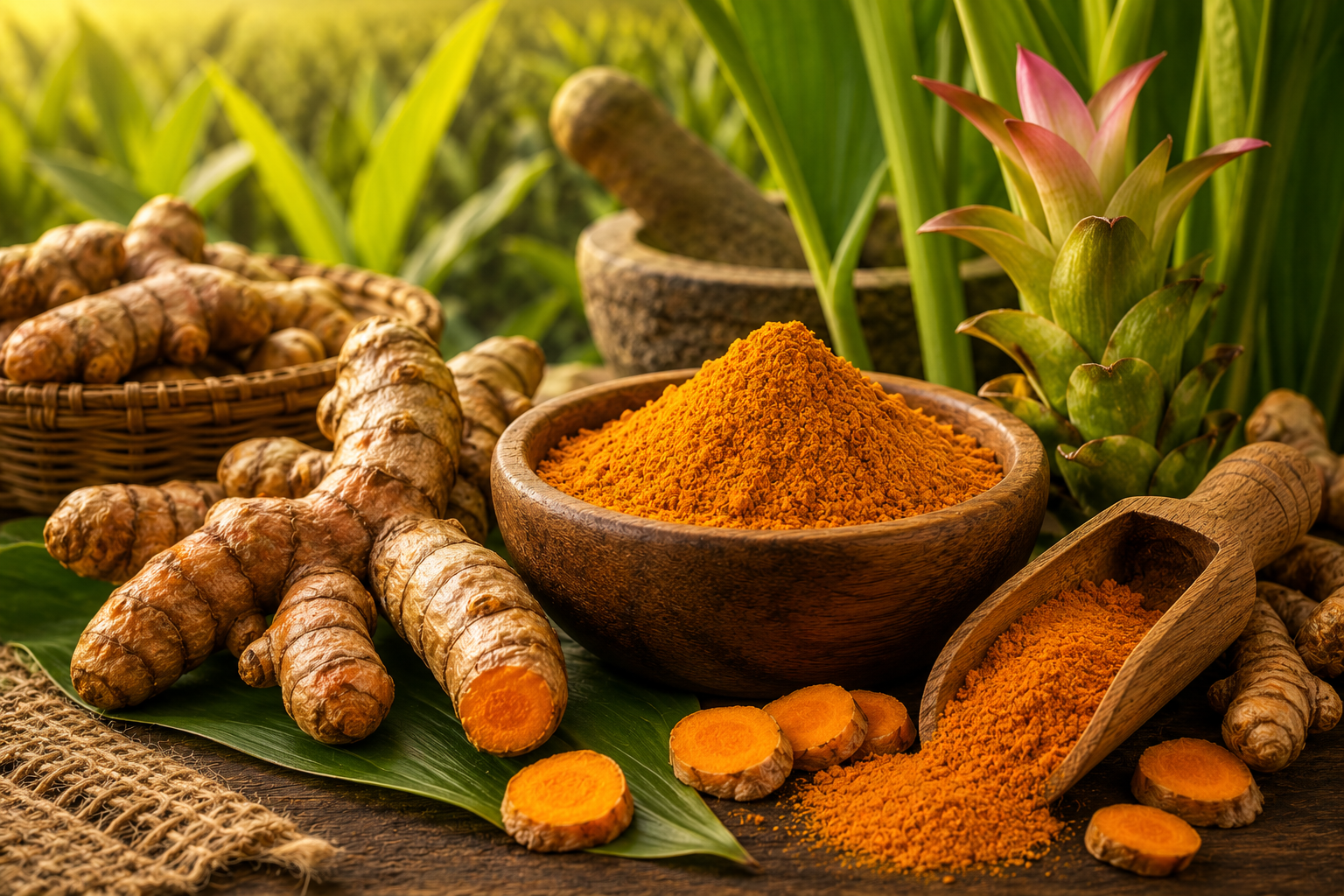
The spice comes from the underground stem (rhizome) of the turmeric plant.
Major turmeric-growing regions in India include:
- Telangana
- Maharashtra
- Karnataka
- Tamil Nadu
- Andhra Pradesh
- Odisha
- Kerala
- West Bengal
Indian turmeric is globally appreciated for its rich colour, high-quality curcumin content, and strong aroma.
How Turmeric is Grown
Turmeric is propagated using pieces of mature rhizomes rather than seeds.
The crop requires:
- Warm tropical temperatures
- Well-drained fertile soil
- Moderate rainfall
- Plenty of sunlight
After 7–10 months, the rhizomes are harvested, boiled or steamed, sun-dried, and polished before being sold whole or ground into powder.
This careful process helps preserve turmeric’s colour, aroma, and quality.
Curcumin: Nature’s Golden Compound
Turmeric contains hundreds of natural plant compounds, but curcumin is the most researched.
Curcumin is known for:
- Providing antioxidant activity
- Supporting the body’s natural inflammatory response
- Contributing to overall wellness
- Giving turmeric its characteristic golden colour
Curcumin is naturally absorbed in relatively small amounts by the body. Combining turmeric with black pepper, which contains piperine, may improve curcumin absorption. This traditional pairing is common in Indian cuisine.
Nutritional Value of Turmeric
Although turmeric is generally used in small quantities, it contains vitamins, minerals, dietary fibre, and beneficial plant compounds.
Nutritional Values (Per 100 g)
| Nutrient | Amount |
|---|---|
| Energy | 354 kcal |
| Protein | 7.8 g |
| Carbohydrates | 65 g |
| Dietary Fibre | 21 g |
| Fat | 9.9 g |
| Calcium | 183 mg |
| Iron | 41 mg |
| Magnesium | 193 mg |
| Phosphorus | 268 mg |
| Potassium | 2,525 mg |
| Sodium | 38 mg |
| Zinc | 4.3 mg |
| Vitamin C | 25.9 mg |
Note: Turmeric is typically consumed in much smaller quantities than 100 g, so nutrient intake per serving is modest.
Health Benefits of Turmeric
When included as part of a balanced diet, turmeric may contribute to overall wellness.
1. Rich in Antioxidants
Curcumin and other compounds provide antioxidant activity that helps protect cells from oxidative stress.
2. Supports the Body’s Natural Inflammatory Response
Curcumin has been widely studied for its role in supporting normal inflammatory processes. Research is ongoing, and turmeric should not be considered a substitute for medical treatment.
3. Supports Digestive Wellness
Turmeric has traditionally been used to support healthy digestion and is commonly added to dals, vegetables, curries, and soups.
4. Everyday Culinary Benefits
Turmeric naturally enhances:
- Colour
- Aroma
- Flavour
- Nutritional diversity
making it a valuable ingredient in everyday cooking.
5. Complements a Healthy Lifestyle
Regular use of turmeric in meals can be part of a varied, balanced diet rich in plant-based ingredients.
Turmeric in Ayurveda
In Ayurveda, turmeric is known as Haridra.
It has been described in classical Ayurvedic texts for centuries.
According to Ayurveda:
- Rasa (Taste): Bitter (Tikta), Pungent (Katu)
- Guna (Qualities): Light (Laghu), Dry (Ruksha)
- Virya (Potency): Heating (Ushna)
- Vipaka (Post-digestive Effect): Pungent (Katu)
Traditionally, turmeric is believed to:
- Support healthy digestion (Agni)
- Help balance Kapha and Vata
- Promote healthy skin
- Support overall vitality
- Be used in traditional formulations and daily wellness practices
These traditional uses belong to Ayurveda and should not be interpreted as established medical treatments.
Myths vs Facts About Turmeric
Myth: Turmeric alone can cure every disease.
Fact: Turmeric is a nutritious spice that may support health as part of a balanced diet, but it is not a cure for diseases.
Myth: More turmeric always means more benefits.
Fact: Moderate culinary use is generally sufficient. Excessive intake may not provide additional benefits and may not suit everyone.
Myth: Fresh turmeric is always better than dried turmeric.
Fact: Both fresh and dried turmeric have culinary value. The choice depends on the recipe and personal preference.
Myth: Turmeric and saffron are the same.
Fact: They are completely different spices from different plants with distinct flavours, aromas, and uses.
How to Use Turmeric Every Day
Turmeric is incredibly versatile and can be used in a variety of dishes, including:
- Dal
- Curries
- Vegetable sabzis
- Rice preparations
- Soups
- Khichdi
- Smoothies
- Golden milk (Haldi Doodh)
- Marinades
- Pickles
Pairing turmeric with a pinch of black pepper and a source of healthy fat, such as ghee or oil, is a common culinary practice.
Storage Tips
To preserve freshness and colour:
- Store in an airtight container.
- Keep away from moisture and direct sunlight.
- Use a dry spoon.
- Store in a cool, dry place.
Proper storage helps maintain turmeric’s aroma and natural colour for longer.
Why Choose Gudora Turmeric?
At Gudora, we source high-quality turmeric to bring authentic colour, rich aroma, and trusted quality to your kitchen.
Whether you’re preparing traditional Indian recipes or modern healthy meals, Gudora Turmeric adds warmth, flavour, and natural goodness to every dish.
👉 Buy Gudora Turmeric Powder: https://www.gudora.in/products/turmeric-powder-haldi-powder-100g
Final Thoughts
Turmeric is more than just a spice—it’s a symbol of India’s rich culinary and cultural heritage. From ancient Ayurvedic traditions to modern kitchens around the world, this golden rhizome continues to be cherished for its vibrant colour, distinctive flavour, and remarkable versatility.
Adding turmeric to your daily meals is an easy way to enrich your cooking while embracing centuries of tradition.
Experience the purity and authenticity of premium turmeric with Gudora.
Gudora – From Soil to Soul.