

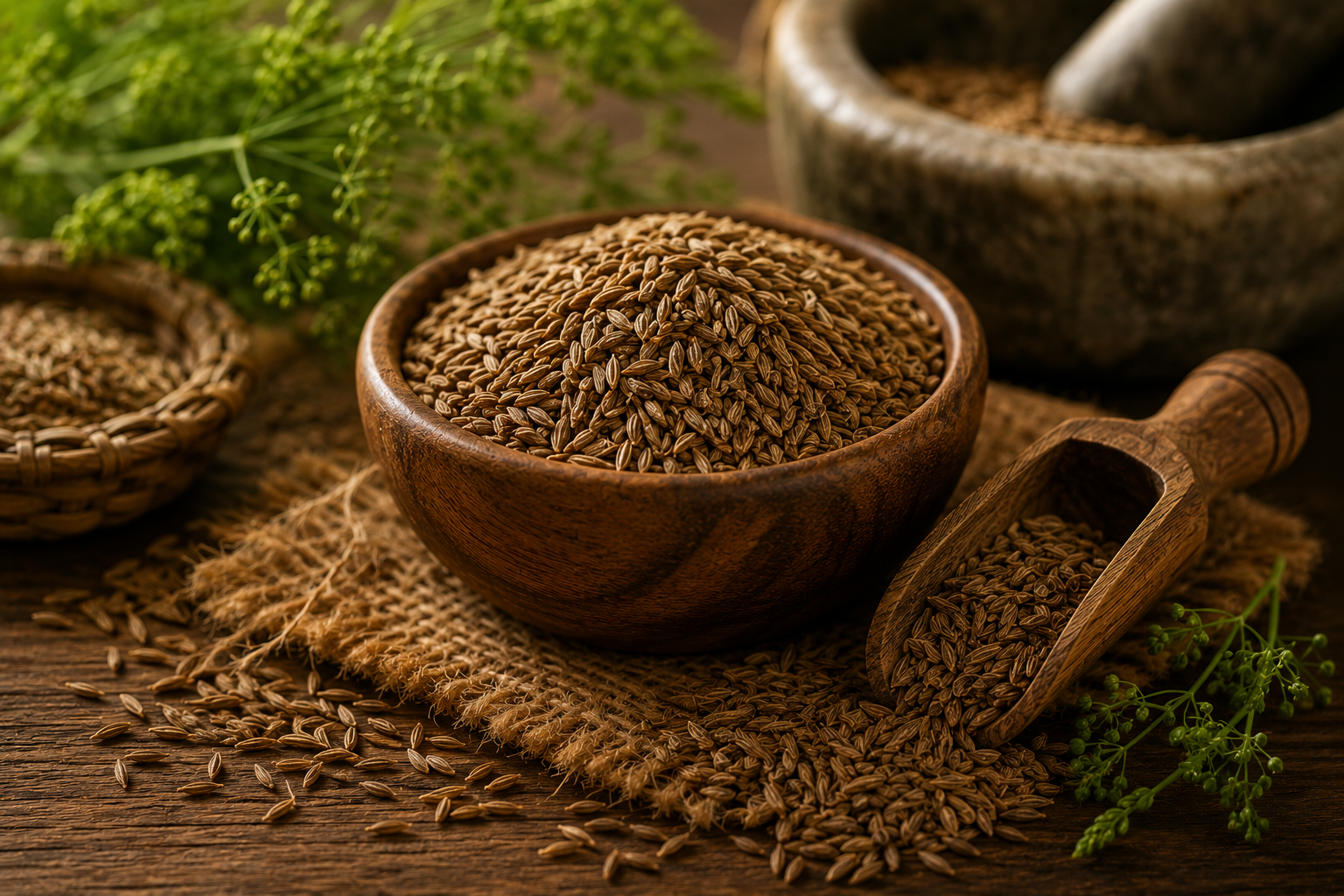
Few spices are as deeply woven into Indian cuisine as Cumin Seeds, popularly known as Jeera. Their warm, earthy aroma and distinctive nutty flavour have made them an indispensable ingredient in kitchens for thousands of years. Whether tempering a simple dal, seasoning vegetables, or enhancing spice blends, cumin has earned its place as one of the world’s most cherished spices.
Beyond its culinary appeal, cumin has a rich history, impressive nutritional profile, and an important place in Ayurveda. In this comprehensive guide, we’ll explore everything you need to know about cumin seeds—from their ancient origins and traditional uses to their nutritional value, modern research, common myths, and everyday applications.
Why is Jeera One of the World’s Most Popular Spices?
Cumin is among the oldest cultivated spices known to humanity. Its unique aroma and versatility make it a staple ingredient in Indian, Middle Eastern, Mediterranean, Mexican, and North African cuisines.
Unlike spices that dominate a dish, cumin enhances the natural flavours of other ingredients. A small quantity can transform the taste and aroma of an entire meal, making it one of the most widely used spices across cultures.
Its ability to complement almost every savoury recipe has made cumin a pantry essential for generations.
The History of Cumin
Cumin has been cultivated for more than 5,000 years. Archaeological discoveries have found cumin seeds in ancient Egyptian tombs, where they were used not only as a culinary spice but also during mummification.
Ancient Greeks and Romans valued cumin for its distinctive flavour, while traders carried it along the famous Silk Road and maritime spice routes.
India embraced cumin centuries ago, and today it plays a central role in Indian cooking—from simple home-style meals to elaborate festive dishes.
Over time, cumin became one of the world’s most traded spices, symbolizing both flavour and prosperity.
Origin of Cumin Seeds
The botanical name of cumin is Cuminum cyminum.
It is believed to have originated in the Eastern Mediterranean region and Southwest Asia, eventually spreading to India through ancient trade.
Today, India is the largest producer and exporter of cumin seeds in the world, contributing nearly 70% of global production.
Major cumin-growing states include:
- Gujarat
- Rajasthan
These regions provide ideal climatic conditions—hot, dry weather and fertile soils—that help develop cumin’s distinctive aroma and essential oils.
How Cumin is Grown
Cumin is a flowering annual herb belonging to the parsley family (Apiaceae).
Farmers sow cumin during the winter season, and the crop matures in about 100–120 days.
Once harvested, the seed heads are dried naturally before the seeds are separated, cleaned, and graded.
High-quality cumin seeds are recognized by their:
- Uniform brown colour
- Strong earthy aroma
- High essential oil content
- Bold flavour
What Makes Cumin Unique?
The distinctive flavour of cumin comes from its naturally occurring essential oils, particularly cuminaldehyde.
These aromatic compounds contribute to cumin’s:
- Warm earthy flavour
- Characteristic aroma
- Culinary versatility
Cumin also contains naturally occurring antioxidants and several essential minerals, making it both a flavourful and nutritious addition to everyday meals.
Nutritional Value of Cumin Seeds
Although cumin is generally consumed in small amounts, it provides valuable nutrients.
Nutritional Values (Per 100 g)
| Nutrient | Amount |
|---|---|
| Energy | 375 kcal |
| Protein | 17.8 g |
| Carbohydrates | 44.2 g |
| Dietary Fibre | 10.5 g |
| Fat | 22.3 g |
| Calcium | 931 mg |
| Iron | 66.4 mg |
| Magnesium | 366 mg |
| Phosphorus | 499 mg |
| Potassium | 1,788 mg |
| Sodium | 168 mg |
| Zinc | 4.8 mg |
| Vitamin A | 1,270 IU |
Note: Since cumin is usually consumed in small quantities, actual nutrient intake per serving is much lower.
Health Benefits of Cumin Seeds
When enjoyed as part of a balanced diet, cumin may support overall wellness.
1. Supports Healthy Digestion
Traditionally, cumin has been used to support digestive comfort. It is commonly added to tempering (tadka), soups, dals, and vegetables for both flavour and digestive support.
2. Naturally Rich in Iron
Cumin contains iron, an essential mineral involved in oxygen transport and normal body functions.
3. Source of Antioxidants
Its naturally occurring plant compounds provide antioxidant activity that helps protect cells from oxidative stress.
4. Adds Flavour Without Extra Salt
Cumin’s bold aroma enhances recipes naturally, helping create flavourful meals with less reliance on excessive salt.
5. Complements a Balanced Diet
Cumin contributes flavour, aroma, and plant-based nutrients that fit well into a healthy eating pattern.
Cumin is a food ingredient and should not be considered a medicine or replacement for medical advice.
Cumin in Ayurveda
In Ayurveda, cumin is known as Jeeraka.
For centuries, it has been valued as a spice that supports digestive balance and overall well-being.
According to Ayurvedic principles:
- Rasa (Taste): Pungent (Katu), Bitter (Tikta)
- Guna (Qualities): Light (Laghu), Dry (Ruksha)
- Virya (Potency): Slightly Heating (Ushna)
- Vipaka (Post-digestive Effect): Pungent (Katu)
Traditionally, cumin is believed to:
- Support Agni (digestive fire)
- Help balance Vata and Kapha
- Promote digestive comfort
- Be included in various Ayurvedic formulations and herbal preparations
These traditional uses are based on Ayurveda and are distinct from conclusions drawn through modern clinical research.
Myths vs Facts About Cumin
Myth: Cumin and fennel are the same spice.
Fact: They belong to the same botanical family but differ greatly in flavour, aroma, appearance, and culinary use.
Myth: Jeera water alone can cause significant weight loss.
Fact: Jeera water can be part of a healthy lifestyle, but no single food or drink leads to weight loss without an overall balanced diet and regular physical activity.
Myth: Roasted cumin loses all its nutrients.
Fact: Roasting enhances cumin’s aroma and flavour. While some volatile oils may change with heat, roasted cumin still retains nutritional value and culinary benefits.
Myth: Ground cumin is always better than whole cumin.
Fact: Whole cumin seeds retain their aroma longer. Freshly grinding or roasting them before use provides the best flavour.
How to Use Cumin Every Day
Cumin is one of the most versatile spices in the kitchen.
Popular uses include:
- Dal tadka
- Vegetable sabzis
- Curries
- Rice dishes
- Jeera rice
- Raita
- Buttermilk
- Soups
- Spice blends (Garam Masala, Chaat Masala)
- Marinades
- Roasted vegetables
- Homemade masalas
Dry roasting cumin before grinding intensifies its aroma and creates a richer flavour profile.
Storage Tips
To maintain freshness:
- Store in an airtight container.
- Keep away from direct sunlight.
- Protect from moisture.
- Roast or grind only when needed for maximum aroma.
Why Choose Gudora Whole Cumin Seeds?
At Gudora, we carefully source premium-quality whole cumin seeds known for their rich aroma, bold flavour, and natural freshness.
Whether you’re preparing a simple family meal or an elaborate feast, Gudora Whole Jeera adds authentic taste and warmth to every recipe.
👉 Buy Gudora Whole Cumin Seeds (Jeera): https://www.gudora.in/products/jeera-cumin-whole-seeds
Final Thoughts
Cumin is more than just a spice—it’s a cornerstone of Indian cooking and a treasured ingredient with a history spanning thousands of years. From ancient civilizations to modern kitchens, cumin continues to enrich recipes with its unmistakable aroma, earthy flavour, and nutritional value.
A pinch of premium-quality cumin can elevate everyday meals while connecting you to centuries of culinary tradition.
Experience authentic flavour with Gudora Whole Cumin Seeds.
Gudora – From Soil to Soul.