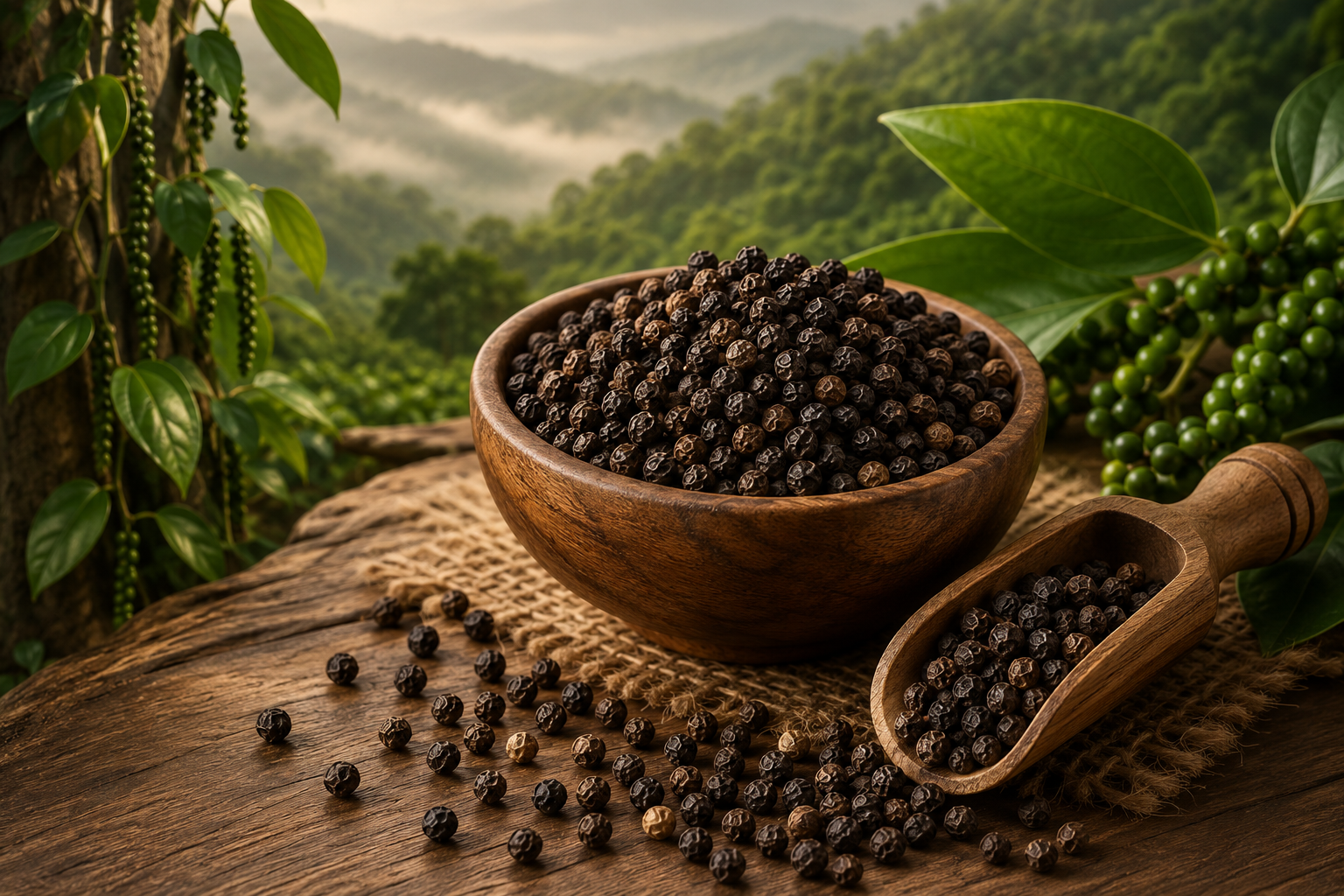
For centuries, Black Pepper (Piper nigrum) has been more than just a seasoning. Known as the “King of Spices,” this tiny black peppercorn has influenced global trade, shaped civilizations, and remained an indispensable ingredient in kitchens around the world. From the lush forests of India’s Western Ghats to modern dining tables across the globe, black pepper continues to be celebrated for its bold flavour, nutritional value, and traditional wellness benefits.
In this comprehensive guide, we’ll explore the fascinating history of black pepper, its origin, nutritional profile, health benefits, Ayurvedic significance, common myths, and practical ways to use it every day.
Why is Black Pepper Called the King of Spices?
Black pepper earned the title “King of Spices” because of its extraordinary influence on world history and cuisine. Unlike many spices that are limited to specific regional dishes, black pepper complements almost every cuisine—from Indian curries and soups to Italian pasta, grilled vegetables, salads, marinades, and even fresh fruits.
During ancient times, black pepper was so valuable that it was often referred to as “Black Gold.” Wealthy merchants traded it across continents, and in some regions it was even accepted as a form of currency. Kings, emperors, and traders prized black pepper for its rarity, flavour, and preservative qualities, making it one of the world’s most sought-after commodities.
Today, despite being widely available, black pepper remains one of the most consumed spices globally because of its versatility and distinctive taste.
The Remarkable History of the Pepper Trade
The story of black pepper is closely tied to the history of global commerce. More than 2,000 years ago, merchants from Rome, Arabia, Persia, and later Europe travelled to India’s Malabar Coast in search of this precious spice.
Ancient maritime trade routes connected India to the Middle East and Europe, with black pepper serving as one of the most valuable exports. The demand for pepper became so great that it motivated explorers to search for new sea routes to India, shaping world history and international trade.
The spice trade transformed coastal cities in southern India into thriving commercial centres and contributed significantly to India’s reputation as the Land of Spices.
Origin of Black Pepper: The Western Ghats of India
Black pepper is native to the Western Ghats, one of the world’s richest biodiversity hotspots. Stretching across Kerala, Karnataka, Tamil Nadu, Goa, and Maharashtra, this mountain range provides the ideal climate for cultivating premium-quality pepper.
The tropical weather, high humidity, fertile soil, and abundant rainfall allow pepper vines to flourish naturally.
The botanical name of black pepper is Piper nigrum, a flowering vine belonging to the Piperaceae family. The familiar black peppercorns are actually dried berries harvested before they reach full maturity.
Even today, the Western Ghats remain one of the finest regions for producing aromatic and flavour-rich black pepper.
How Black Pepper is Grown
Black pepper grows as a climbing vine that requires support from trees or specially constructed poles. Farmers carefully harvest the green berries before they ripen completely. The berries are then cleaned and sun-dried for several days.
During drying, natural enzymatic reactions cause the outer skin to wrinkle and turn black, creating the characteristic peppercorn we recognize today.
This traditional drying process helps preserve the spice’s natural oils, aroma, and pungency.
What Makes Black Pepper Special? Understanding Piperine
The distinctive taste and aroma of black pepper come primarily from Piperine, a naturally occurring alkaloid.
Piperine is responsible for:
- The characteristic pungent flavour of black pepper
- Supporting the absorption of certain nutrients
- Antioxidant properties
- Contributing to digestive wellness
One of the best-known culinary combinations is black pepper with turmeric. Research suggests that piperine can significantly improve the absorption of curcumin, the primary active compound found in turmeric. This is one reason why the two spices are frequently used together in traditional Indian cooking.
Nutritional Value of Black Pepper
Although black pepper is typically consumed in small quantities, it contains several important nutrients and plant compounds.
Nutritional Values (Per 100 g)
| Nutrient | Amount |
|---|---|
| Energy | 251 kcal |
| Protein | 10.4 g |
| Carbohydrates | 64 g |
| Dietary Fibre | 25.3 g |
| Fat | 3.3 g |
| Calcium | 443 mg |
| Iron | 9.7 mg |
| Magnesium | 171 mg |
| Phosphorus | 158 mg |
| Potassium | 1,329 mg |
| Sodium | 20 mg |
| Zinc | 1.4 mg |
| Vitamin K | 164 µg |
Note: Black pepper is usually consumed in much smaller amounts than 100 g, so actual nutrient intake per serving is modest.
Health Benefits of Black Pepper
When included as part of a balanced diet, black pepper may offer several benefits.
1. Supports Healthy Digestion
Black pepper has traditionally been used to stimulate digestive secretions and enhance the digestion of food. Its pungent compounds may encourage the body’s natural digestive processes.
2. Rich in Antioxidants
Piperine and other naturally occurring compounds provide antioxidant activity, helping protect cells from oxidative stress.
3. Enhances Nutrient Absorption
One of black pepper’s most researched benefits is its ability to improve the absorption of certain nutrients and bioactive compounds, including curcumin from turmeric.
4. Adds Flavour Naturally
Using black pepper can enhance the taste of food without relying heavily on excess salt or artificial flavour enhancers.
5. Supports Overall Wellness
As part of a healthy eating pattern, black pepper contributes flavour, phytonutrients, and antioxidants that support general well-being.
Black pepper is a food ingredient, not a medicine. It should not be used as a substitute for medical advice or treatment.
Black Pepper in Ayurveda
In Ayurveda, black pepper is known as Maricha and has been valued for thousands of years.
According to Ayurvedic texts:
- Rasa (Taste): Katu (Pungent)
- Guna (Qualities): Light (Laghu), Sharp (Tikshna)
- Virya (Potency): Heating (Ushna)
- Vipaka (Post-digestive Effect): Pungent
Traditionally, black pepper is believed to:
- Stimulate Agni (digestive fire)
- Help balance Kapha dosha
- Support digestion and metabolism
- Promote respiratory comfort
- Be used in traditional formulations such as Trikatu, along with ginger and long pepper
These uses come from the Ayurvedic tradition and are distinct from conclusions reached through modern clinical research.
Myths vs Facts About Black Pepper
Myth: Black pepper is the hottest spice.
Fact: Black pepper provides warmth and depth of flavour, but many chilli varieties are significantly hotter.
Myth: Eating more black pepper gives greater health benefits.
Fact: Moderate consumption is generally sufficient. Excessive intake may cause digestive discomfort in some people.
Myth: Black pepper is only suitable for spicy Indian food.
Fact: Black pepper is used worldwide in soups, salads, pasta, sandwiches, grilled vegetables, eggs, sauces, seafood, meats, fruits, and desserts.
Myth: White pepper and black pepper come from different plants.
Fact: Both come from the same plant (Piper nigrum). The difference lies in the processing method.
How to Use Black Pepper Every Day
Whole black pepper can elevate the flavour of countless dishes.
Popular uses include:
- Freshly ground over salads
- Soups and broths
- Vegetable stir-fries
- Dal and curries
- Pasta and pizza
- Marinades
- Sandwiches
- Omelettes
- Grilled vegetables
- Fresh fruit with a pinch of pepper
For maximum aroma, grind whole peppercorns just before use.
Storage Tips
To preserve freshness:
- Store in an airtight container.
- Keep away from direct sunlight.
- Avoid moisture.
- Buy whole peppercorns and grind them as needed for the best flavour.
Why Choose Gudora Whole Black Pepper?
At Gudora, we believe exceptional flavour starts with exceptional ingredients.
Our Whole Black Pepper is carefully selected to deliver bold aroma, authentic taste, and premium quality for your everyday cooking.
Whether you’re preparing traditional Indian recipes or international cuisine, Gudora Whole Black Pepper brings freshness and richness to every meal.
👉 Buy Gudora Whole Black Pepper (Kali Mirch): https://www.gudora.in/products/whole-black-pepper-kali-mirch
Final Thoughts
Black pepper is far more than a common kitchen spice. It has shaped global history, supported traditional wellness systems, and continues to play an important role in cuisines around the world. Its unique flavour, rich heritage, and naturally occurring piperine make it a timeless pantry essential.
Whether you’re seasoning a simple salad or preparing a festive feast, a pinch of quality black pepper can transform the entire dish.
Choose authentic, premium-quality black pepper and experience the difference in every bite.
Gudora – From Soil to Soul.